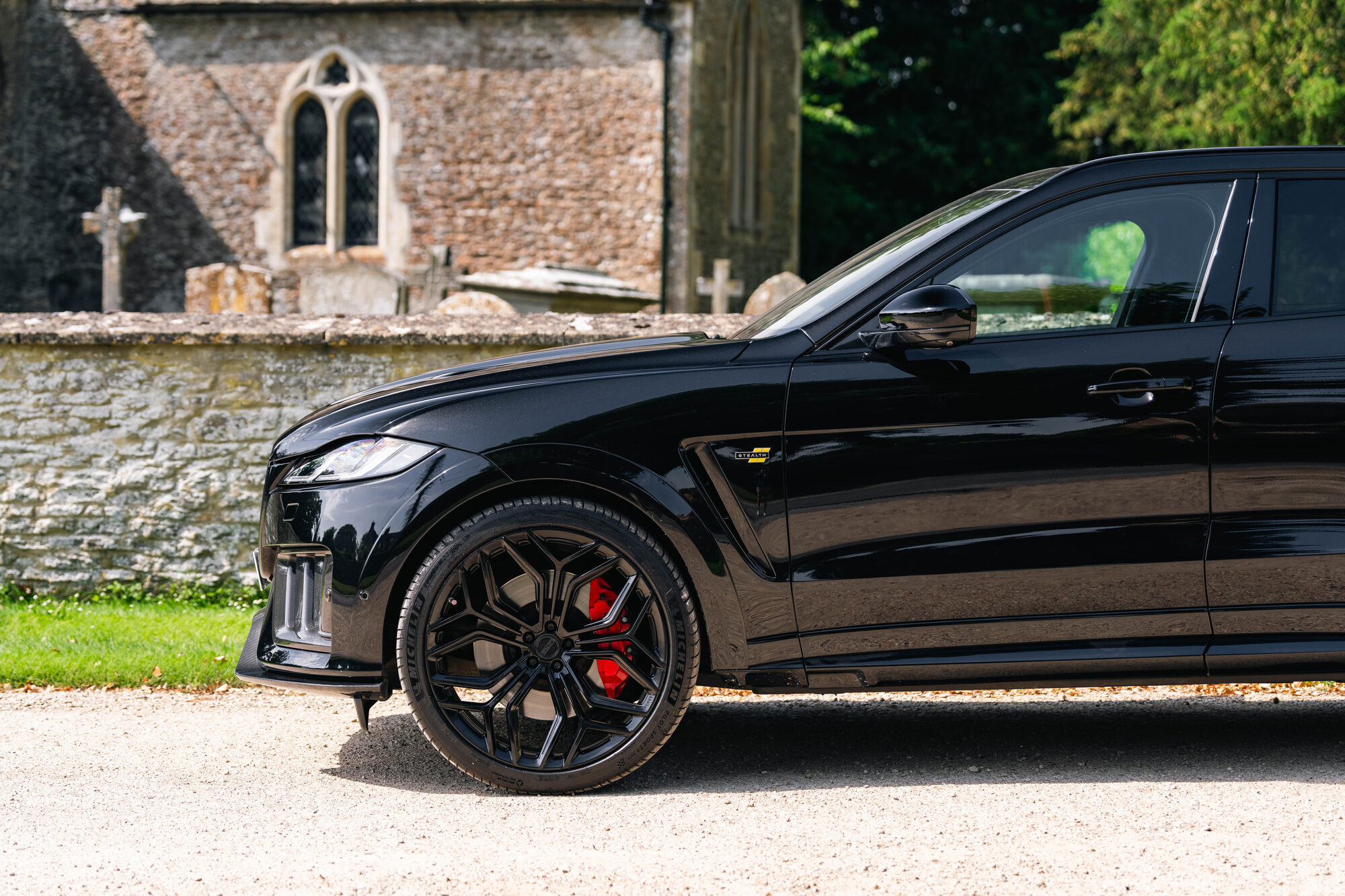
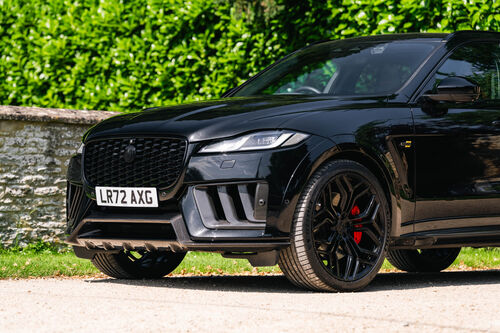
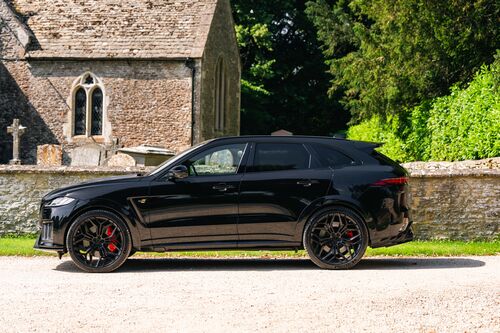
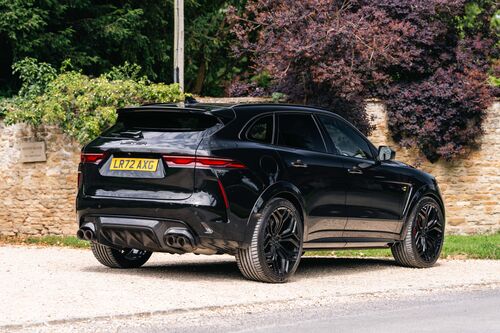
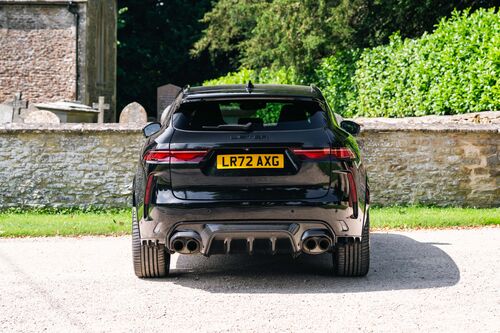
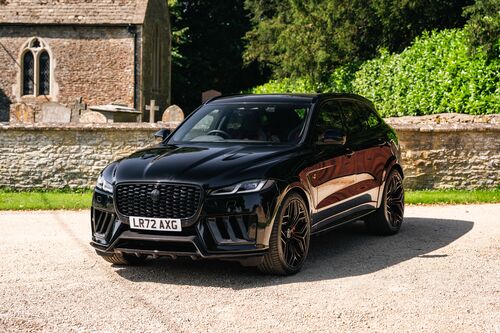
A privately held example of the SUV Lister launched as Britain’s fastest and most powerful: 666 bhp, and a claimed 195 mph at the time. The planned run of one hundred was never completed — Jaguar ended F-Pace production, and with it the only car a Lister Stealth can be built from. This website documents its specification, custody and evidence — in full.
Headline figures for one of the most purposeful Jaguar-derived SUVs ever built. Manufacturer's figures for the Stealth conversion, supported by independent inspection (RAC Advanced Vehicle Inspection, March 2026).
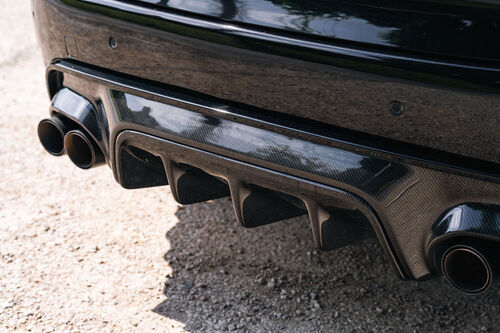
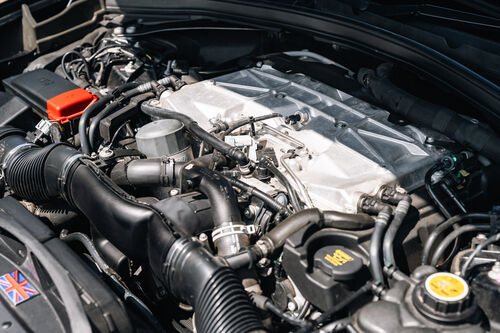
Lister supercharged 5.0-litre V8, derived from the Jaguar F-Pace SVR platform and extensively reworked by Lister at their Blackburn works. The final output figure is achieved through a recalibrated supercharger pulley, revised ECU mapping, and a bespoke stainless exhaust system.
The F-Pace SVR platform is retained and comprehensively uprated. Adaptive Dynamics are recalibrated for the additional torque; springs, dampers and anti-roll bars are revised. This specific car carries the full polybush suspension upgrade, recorded in its documented specification — an uncompromising chassis choice.

The Lister Stealth is not a cosmetic exercise. Every element of this car — from the widened carbonfibre body to the recalibrated drivetrain — exists to serve a single purpose: to deliver the most capable, most visceral expression of the Jaguar F-Pace architecture that Lister could produce within a planned build run of one hundred vehicles — a run that was never completed, and now never can be.
This example is specified in full factory trim with the addition of the polybush complete suspension upgrade. The alloy coolant pipe uprate was carried out as a preventative measure early in the car's life, ahead of any requirement. The complete modification record is maintained here, in this document.
A Lister is not a badge applied to a Jaguar. It is the current end of a line that began with a Cambridge engineering firm in 1890, and it is worth setting out plainly.
Lister is older than its cars. Brian Lister founded the car company in 1954 on top of his family's engineering business, established in Cambridge in 1890 — sixty-four years of machining and fabrication before the first racing car left the works. The earliest examples, the Lister-Bristols of 1954–55, used a tubular ladder chassis and a de Dion rear axle: light, stiff, and unremarkable only in the sense that every part of them was done properly.
The 1957 season is the one that matters. Lister's own account of the Lister-Jaguar records that of fourteen races entered, it won twelve, setting either fastest lap or an outright record on each occasion. It took the British Empire Trophy that year and is regarded as the most successful sports racing car of the late 1950s. It was known as the Knobbly, for the curved and knobbled bodywork the height of the Jaguar engine forced upon it. Stirling Moss drove one, as did Ivor Bueb and Bruce Halford. The lead driver, and Brian Lister's close friend, was Archie Scott Brown — a Scot with significant physical disabilities whose racing licence was formally protested on safety grounds and restored on appeal. He was killed at Spa in May 1958. After further deaths the following year, Brian Lister withdrew the company from racing in the summer of 1959, having built the most successful sports racer of its era and judged that to be enough.
The name then lay dormant until 1986, when Laurence Pearce revived it and took some ninety Jaguar XJSs beyond 200 mph. The Lister Storm followed in 1993, carrying what was at that time the largest-displacement V12 ever fitted to a production car — a seven-litre unit — and won the FIA GT Championship in 2000. The intervening decades are not empty either: Frank Costin bodied the Chevrolet-engined car of 1959, and Carroll Shelby reworked a Lister-prepared Sunbeam Tiger to 275 hp for Le Mans in 1963.
Andrew and Lawrence Whittaker acquired the company in 2013. Ten continuation Knobblys built for the sixtieth anniversary in 2014 took £5m in orders, and the Knobbly Stirling Moss edition of 2016 was presented as the only magnesium-bodied car in the world. In January 2018 came the LFT-666: F-Type based, 666 bhp, 208 mph, limited to ninety-nine. Then, in August 2020, the Stealth. The 666 bhp figure carried by this car is not coincidence but house signature, brought across from the LFT. This machine sits at the end of a line running back through the Storm's V12 and the Knobbly's twelve wins from fourteen starts to an engineering works in Cambridge in 1890.
Sources: Lister Motor Company's own published history and launch material, and the contemporary motorsport record.
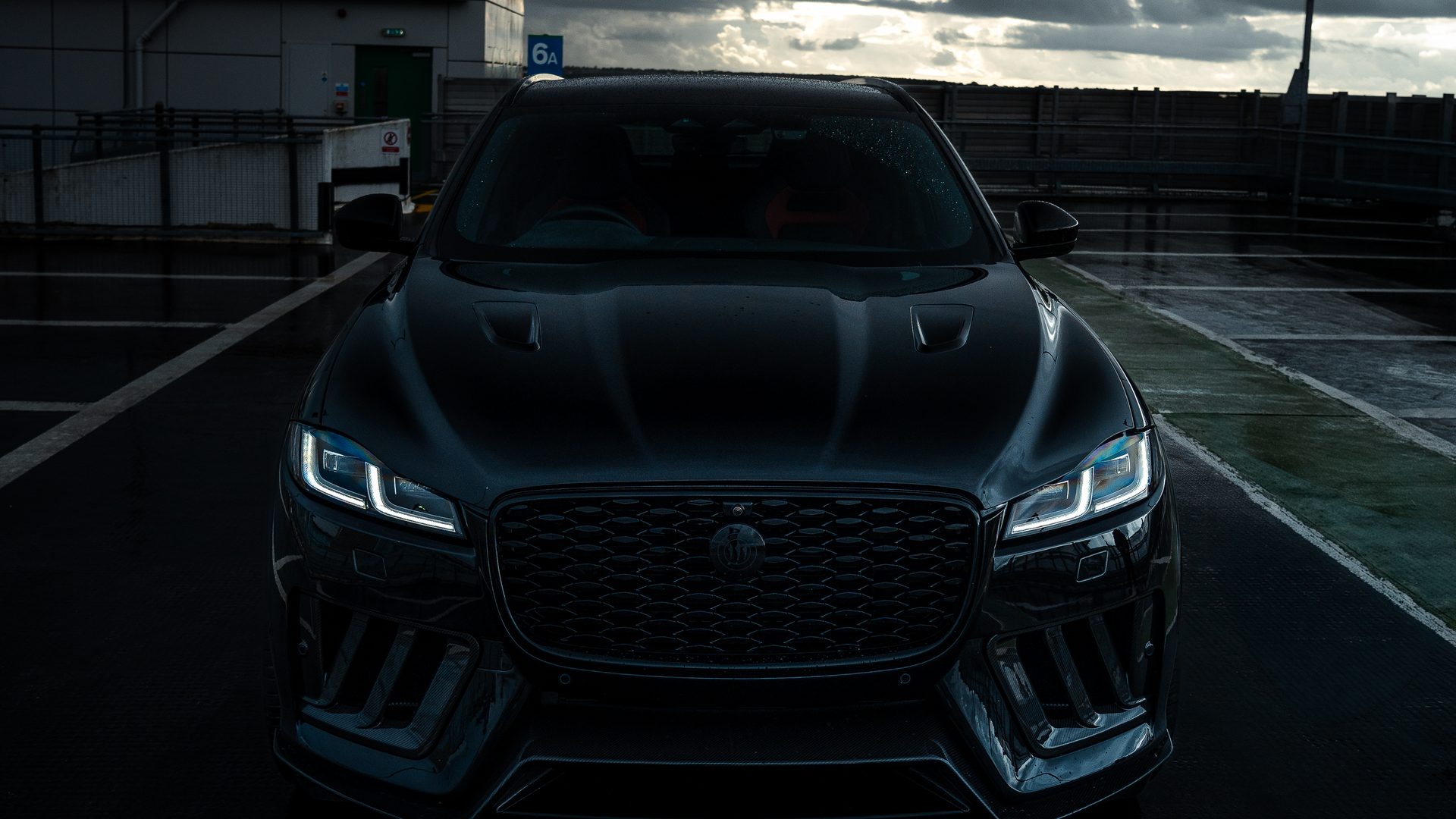
A limited-production car of this character demands a specific approach to ownership. Three governing principles shape every decision made in the custody of this machine.
Every mechanical decision recorded against this car has been executed ahead of requirement — not in response to a failure. The alloy coolant pipes, the polybush suspension, the service intervals — all done early, to specification, and evidenced in the history folder.
This car carries only factory-authorised modifications. Nothing has been added that cannot be substantiated, and nothing has been removed. The full factory specification is maintained intact alongside the subsequent documented upgrades.
Every aspect of this car's custody — from delivery mileage to service intervals to photographic evidence — is recorded here. This site is the living record of the machine: updated as events occur, and accurate at all times.
A chronological record of significant events in the custody of this car — from delivery through to the present. Updated as events occur.
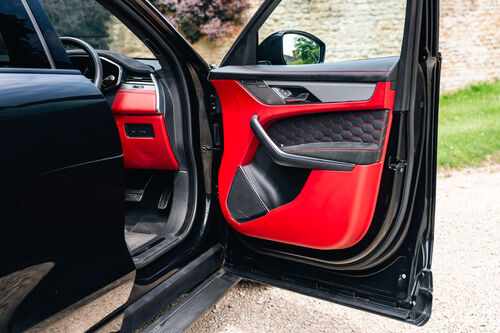
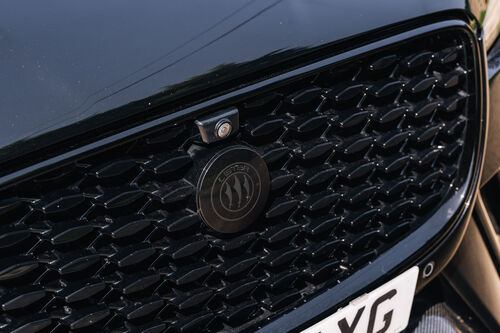
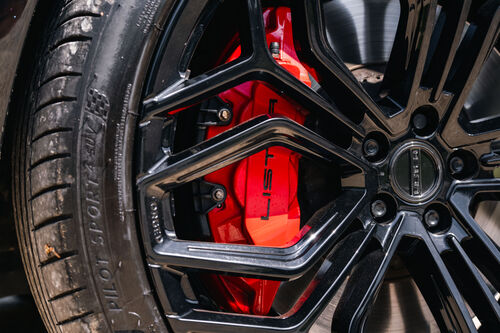
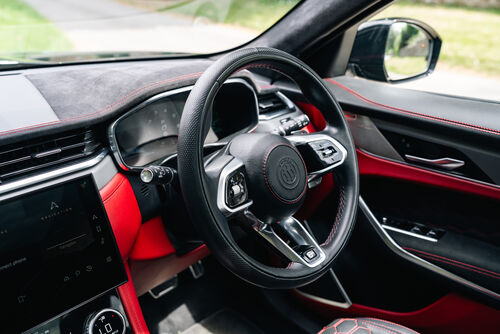
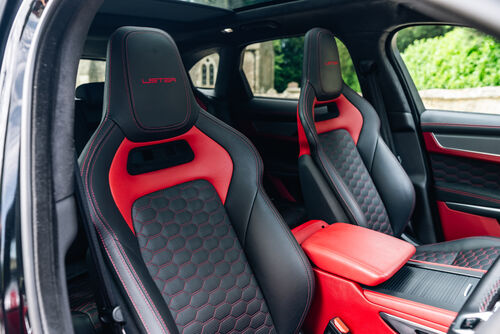
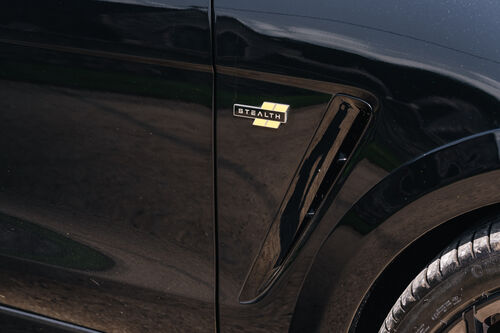
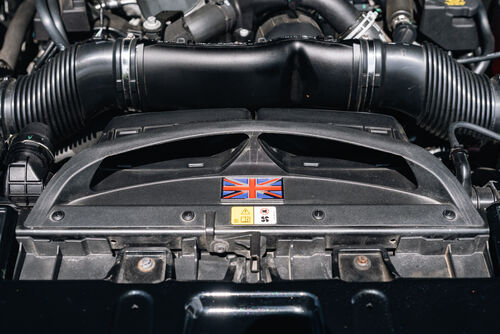
Photographed in a dedicated session for the record — exterior, detail, interior and engine bay. The full archive holds these and every photograph added since.